
Sustainability cannot be an afterthought, especially when organizing a summit dedicated to it.
By Viviane Vaz for MICE INSIGHTS
The 30th UN Climate Change Conference (COP 30) in Belém, Brazil, was supposed to be a showcase: a global gathering set amidst the Amazon, symbolizing the very heart of the climate fight. Instead, the summit is plagued by contradictions, poor planning (with a € 90 million budget), and a failure to live up to its green ambitions.
The story of COP 30 is ultimately one of contrast. On the one hand, the conference delivers innovative policy frameworks, major financial commitments, and a focus on equity and inclusion that many previous COPs lacked. Climate diplomacy around forest protection, health resilience, and climate technology sees a momentum.
On the other hand, logistical missteps — from flooding and heat to diesel dependence and overpriced accommodations — exposes the gap between climate ambition and practical implementation.
Sustainability cannot be an afterthought, especially when organizing a summit dedicated to it.
Now, let’s look at these issues from the perspective of MICE professionals.
🌧️ 🥾 Flooded welcome
On day one, torrential rain turned parts of the summit grounds into impassable puddles. Walkways between national pavilions flooded, routes to dining areas were submerged, and some corridors were shut entirely. Mobility agents blocked access to key zones, leaving delegates stranded.
Inside the tents and structures, the infrastructure buckled: reports surfaced of power outages, water leaks, and electricity issues in several pavilions. For a conference held in one of the world’s most climate-vulnerable regions, the flooding was not just ironic — it suggested a lack of basic urban resilience planning.
Lesson: Don’t ignore environmental realities
Major events must have robust weather-adapted design (elevated walkways, waterproofing, and contingency plans. Or avoid placing key infrastructure in areas prone to flooding without proper drainage.
🥵 🪭 Sweltering conditions
If the rain was bad, the heat is proving just as challenging. Many parts of the Blue Zone — where the core negotiations take place — reportedly lack proper air-conditioning. Delegates have resorted to handheld fans, but that’s not enough when temperatures soar. Several attendees have already sought medical help for dehydration, heat exhaustion, and headaches.
Any summit should feel comfortable for its participants. But in Belém, the infrastructure seems to have overlooked the basics.
Lesson: Don’t forget participant comfort
Temperature control, hydration, safety, and comfort are non-negotiables for delegates. Never underinvest in cooling, ventilation, shade, or hydration stations.
🛢️⚡Diesel-Powered paradox
One of the most striking ironies at COP 30 is the summit’s heavy dependence on diesel. Generators provide back-up power, and the two large cruise ships docked in Belém’s port — used as floating hotels for delegates — run on diesel to power critical systems such as air conditioning, lighting, and kitchens. These ships, while solving the urgent accommodation shortage, come with a high carbon price tag.
This raises a glaring question: why did organizers not explore solar panels, floating solar platforms, or other near-zero-emission energy solutions — systems that could have left a renewable-energy legacy for Belém? After all, the Amazon region is rich in sunshine, and even temporary solar infrastructure could have drastically reduced diesel use during the summit. Better yet, such installations could remain after COP 30, benefiting local infrastructure, schools, or public services. Instead, the choice seems to have leaned toward conventional, quickly deployed solutions — undermining the very sustainability goals the summit is meant to advance.
Lesson: Don’t choose operational solutions that contradict your event’s purpose
Operational choices must align with the event’s stated values.
🤑 🚢 Accommodation — not so green, not so affordable
Accommodation has become a major headache. With Belém’s hotel capacity badly stretched, organizers chartered two cruise ships to house delegates. But these are far from the sustainable, low-impact housing one might expect at a climate summit.
Furthermore, market rates for local hotels have skyrocketed, with prices reportedly reaching into the hundreds — or even thousands — of dollars per night. These steep costs risk excluding smaller NGOs, youth activists, and delegates from developing nations, raising serious questions about equity and inclusivity in the summit’s logistics.
Lesson: Don’t price out essential participants
Pre-negotiated accommodation blocks (Early Contracting). Or choose a host city with sufficient capacity & competition.
🪧 🚨 Security under strain
Security at COP 30 has also come under fire. Federal and local forces, along with river police, are heavily deployed — especially around the floating hotels. Tensions escalated when indigenous leaders and climate activists managed to breach security perimeters and move into restricted areas of the Blue Zone. Reports say some scuffles broke out, with security pushing back protesters.
These incidents reflect a deeper discontent: indigenous groups, essential voices in the climate conversation, argue they’ve been sidelined during a summit that’s supposed to highlight their lands, rights, and perspectives.
Lesson: Don’t let security overshadow the event’s values
Clashes between groups reveal poor stakeholder engagement. Security protocols must respect — not alienate — the communities central to the event’s themes. The security infrastructure and staff must be designed for conflict prevention and de-escalation.
💡 Sustainable legacy?
This UN Climate Change Conference had a chance to leave a lasting, positive mark on Belém: solar installations, greener transport, resilient architecture, and community-focused infrastructure. But so far, the choices made reflect a missed opportunity.
“When we talk about the COP, it’s impossible not to think about the difference between construction projects in the outskirts and in the city center. On Avenida Visconde de Souza Franco, known as the Doca, everything is planned with the residents’ well-being in mind, while in the outskirts the leisure and green spaces are left to residual areas, and people themselves have to find a way to make things work,” said architect and urban planner Amanda Ferreira to the newspaper O Eco.
Lesson: Don’t waste opportunities for lasting impact
Major events should leave sustainable, socially valuable infrastructure behind.
In a nutshell, COP 30 in Belém could serve as a warning: if you don’t plan for sustainability from the ground up, even your grandest green ambitions can drown — both in the rain and in contradictions.
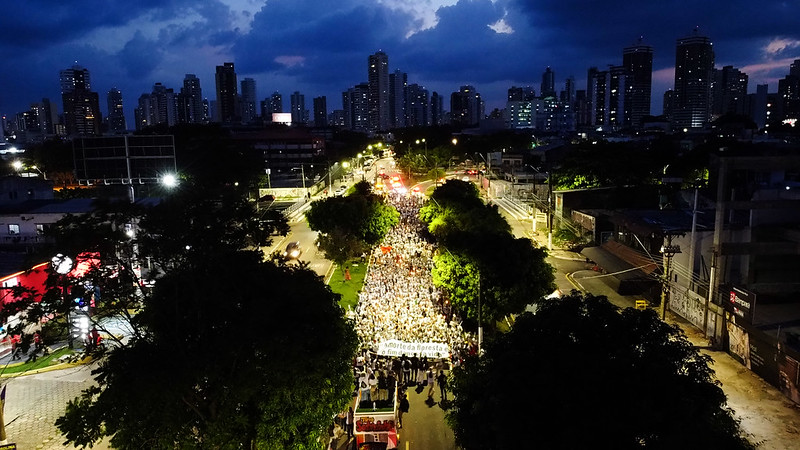
Cover drone image from Belem, during COP 30, by Alex Ferro.
 Mice Insights
Leave a comment